
A real production-tooling problem
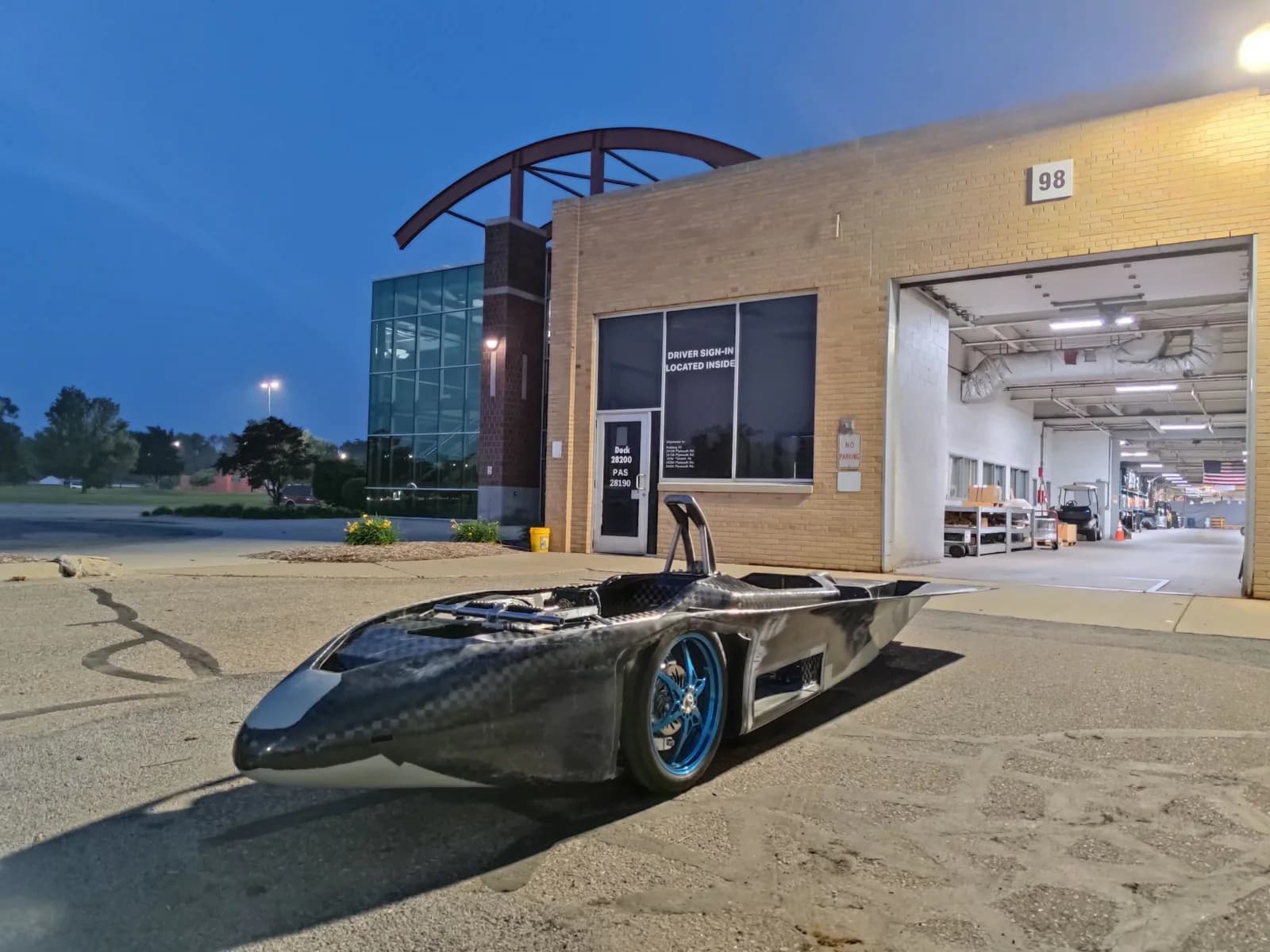
The University of Michigan Solar Car Team designs, builds, and races solar-electric vehicles as a student-run engineering organization. For its 2023 car, Astrum, the team needed composite molds for carbon-fiber body components. Those molds had to preserve the intended geometry and provide a dependable working surface for the team’s layup process.
Prestige’s assignment was specific: receive the project’s CNC-machined patterns and turn them into production tooling. The team would use those molds to make the composite parts that became part of the finished vehicle.
From patterns to composite molds
A finished pattern is not yet a production mold. Prestige prepared the physical forms, built the composite tooling, and finished the mold surfaces for the work that followed. That required attention to geometry, mold construction, reinforcement, release, and the condition of the working surface.
The project is a useful example of how separate capabilities can meet at one handoff. Pattern machining established the shape. Prestige’s mold work converted that shape into tooling the team could use to manufacture carbon-fiber components.
Astrum’s 2023 result
Astrum competed in the 2023 Bridgestone World Solar Challenge in Australia and finished fourth in the Challenger Class. That result belongs to the student team. Prestige is proud that tooling built in our Elkhart shop supported one part of the manufacturing effort that got the car to the starting line.
The value of the project was not a marketing claim about one mold deciding a race. It was the practical collaboration behind the car: a capable student team, a clear physical handoff, and production tooling made for the real composite work ahead.
If your project needs a physical pattern, a composite mold, or both, send Prestige the starting information you have.